
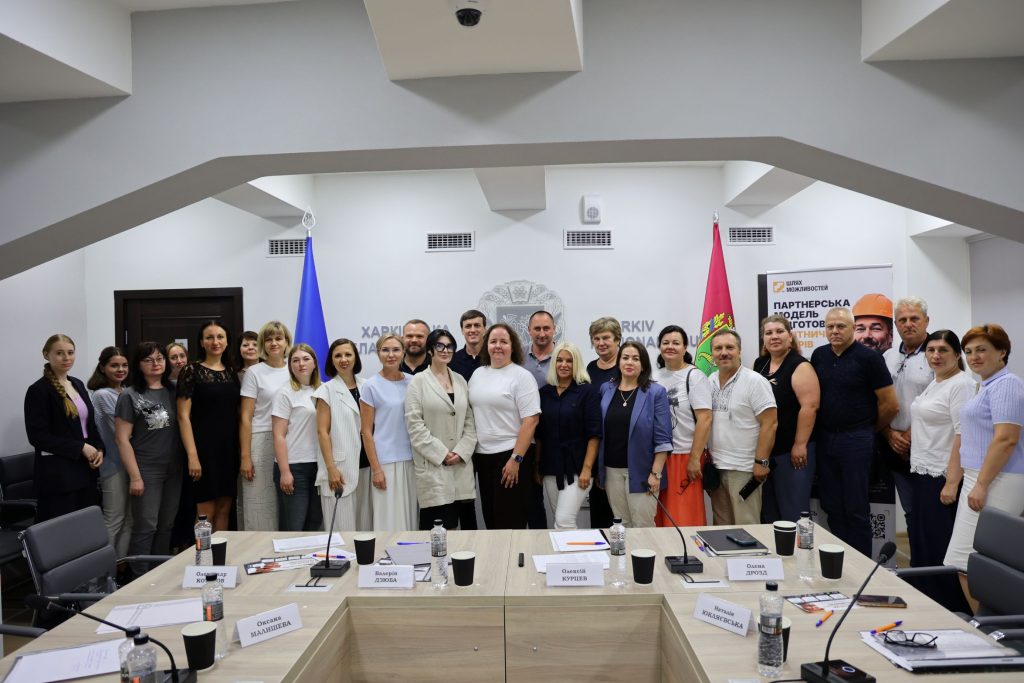
Ukrainian Charity Alliance, which initiated and is implementing the project, united representatives of regional authorities, communities, employment services, vocational education, and the American charitable organization Nova Ukraine around a new model of personnel training - from a confirmed employer's request to practical training and interaction with an enterprise that needs employees. The project is implemented with the financial support of Nova Ukraine in partnership with the Kharkiv Regional Council and the Kharkiv Regional Employment Center.
The Kharkiv region is simultaneously facing two seemingly contradictory problems. Employers cannot find qualified workers, and people who are looking for work or cannot return to their previous profession do not always have the skills needed by the local labor market.
After implementing the first stage of the "Path of Opportunities", the Ukrainian Charity Alliance team came to the conclusion: the problem lies not only in access to education, but in the gap between the needs of employers, the opportunities of vocational education, and the professional path of a person.
That is why in version 2.0 the logic of training has been changed: the project begins not with a ready-made course and group recruitment, but with a confirmed personnel need of a specific employer.
According to the data presented at the meeting by the director of the Kharkiv Center for Vocational Education of the State Employment Service, Oleksandr Kotiukov, the greatest shortage in the Kharkiv region today is observed among electricians, turners, welders, plumbers, bricklayers, auto mechanics, and operators of computer-controlled machines. In 2025 alone, 61 out of 187 vacancies for electricians were filled, and for individual professions, the level of filling vacancies this year ranges from 14% to 63%.
According to information provided during the roundtable, employers are offering 50,000 hryvnias or more for individual vacancies in technical and construction professions. These are individual market offers, not guaranteed levels of pay for all participants in future programs. Modern vocational education allows you to master individual practical competencies within a few weeks or months.
This data shows that in many blue-collar and technical occupations, the problem is not a lack of vacancies, but a lack of people with the right skills.


The first stage of the "Path of Opportunities", implemented in cooperation with the Kharkiv Regional Employment Center, covered 160 participants in ten groups in the areas of "Junior Accountant for Non-Profit Organizations" and "Junior Project Manager for Non-Profit Organizations.".
The first phase confirmed the significant demand for accessible vocational training. At the same time, further analysis showed the need to more closely link training to specific employer demand. It was this conclusion that became the basis for version 2.0.
«"We do not start with training groups, but with a specific request from the employer. Training programs will be formed specifically for his needs, professional tests, internships and further support of participants will take place. As a result, a person should receive not only a new profession, but also a real opportunity for employment."»
Oleksii Kurtsev, CEO of Ukrainian Charity Alliance
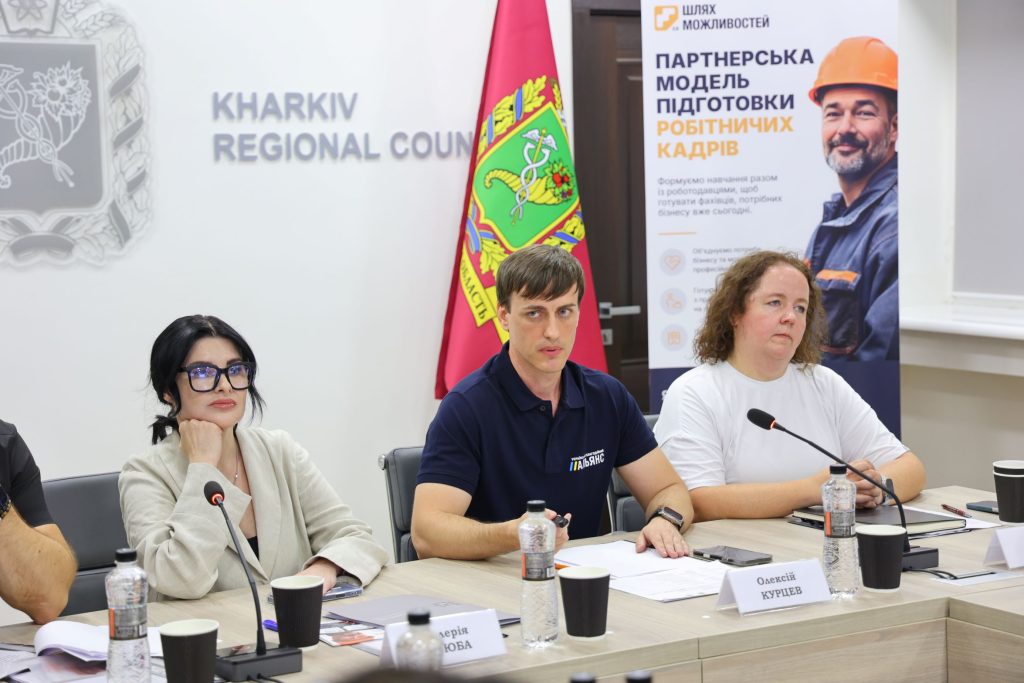
The approximate duration of the training will be from 2 to 13 weeks, depending on the direction and content of the confirmed personnel request. The participant's itinerary includes professional tests, practical training and, if possible, an internship at the workplace.
The project does not guarantee automatic employment, but it shortens the path between training and a concrete job opportunity.
For such a model to work, a single educational institution or just an employment service is not enough. A system is needed in which each partner is responsible for their part of the journey.
Communities help identify employers and staffing needs. The Employment Service provides labor market data, and vocational education institutions adapt programs to confirmed demand. The Kharkiv Regional Council coordinates interaction at the regional level, Nova Ukraine supports the launch of the model, and Ukrainian Charity Alliance combines these components into a single route — from confirmation of staffing needs to professional orientation, practical training, professional trials, and support for the participant in interaction with the employer.
The participants did not limit themselves to discussing the staffing shortage. The main practical result of the meeting was the agreement on a mechanism for collecting employers' needs and the first steps towards launching the model.
«For the Kharkiv region, the training of qualified specialists in labor and technical professions is of strategic importance. Already today, enterprises are experiencing a personnel shortage, and during the restoration of the region, the need for such specialists will only grow. Our task is to combine the opportunities for vocational education, the requests of employers and people who are ready to acquire new skills and work in the Kharkiv region»
Valentyna Dziuba, Deputy Chairman of the Kharkiv Regional Council
With the support of the Head of the Kharkiv Regional Council, Tetyana Yehorova-Lutsenko, the regional council joined the project as a partner and will coordinate interaction with the territorial communities of the region.
This establishes personnel training as an important component of the restoration of the Kharkiv region.
«During the implementation of recovery projects, we constantly face a shortage of qualified workers. That is why the training of specialists is an important component of the recovery of communities and the development of the state»

A separate component of the approach is to overcome the stereotypical division of professions into "male" and "female" and expand women's access to technical specialties. UCA and partners proceed from the fact that professional choice should be determined by a person's abilities, motivation and capabilities, and not by established ideas about who is suitable for a particular profession.
For this model, such capacity is fundamental: neither party can independently bridge the gap between the personnel needs of enterprises and the capabilities of people. Nova Ukraine supported the project as a pilot model, the experience of which, if proven effective, can be used to adapt the approach in other regions of Ukraine.
Vocational education institutions already have significant experience in short-term training and can adapt programs to confirmed personnel requests. Practical training in the first identified areas is planned on the basis of the Kharkiv Vocational College of Construction and Industry. According to information presented by the college during the roundtable, the institution has already developed more than 60 short-term programs in electrical engineering, construction, welding, plumbing and other areas. In 2025, the college trained 579 students, and 70 applicants are currently waiting for training in the "electrician" area. The state of the educational infrastructure and the need for its renewal will be determined based on the results of a technical assessment and in accordance with the content of future training programs.
The next stage will be the collection of confirmed staffing needs of employers in the communities of the Kharkiv region. The communities will form the initial base of employers and distribute the form for business, and the UBA team will directly clarify staffing needs during interviews with employers. The parties also agree to hold local roundtables with employers in the communities. It is on the basis of this data that the list of professions will be determined, training modules will be formed, and the first iteration of training for participants will begin.
The approximate areas of training have already been outlined: electrical and energy, construction and finishing, carpentry and furniture, electric welding, plumbing and auto mechanics. The final list of professions will be formed based on confirmed requests from employers.
The number of areas and participants in the first iteration will be determined based on confirmed employer requests. This approach allows training to be shaped according to real demand, rather than a pre-established list of courses.
For employers in the Kharkiv region: report current or projected staffing needs through form for employers.
Residents communities: information about the specific areas of training and the recruitment of participants will be made public after the completion of the first stage of collecting and analyzing personnel requests on the official resources of the Ukrainian Charity Alliance.
For communities and employers who need advice:
Kateryna Babenko
+38 099 609 03 56
kateryna.babenko@uba.com.ua
These are also people who will be able to work in them, support the livelihoods of communities, and create the economic foundation for their development.
That is why Ukrainian Charity Alliance considers "Path of Opportunities 2.0" not as a separate educational project, but as a model for human capital development. Its success will be determined not only by the number of courses conducted, but primarily by whether it will be possible to create a working connection between employers' personnel demand, professional education opportunities, and people's professional routes.
The roundtable at the Kharkiv Regional Council was the first step in launching this system. The next step is to turn the partnership around the table into confirmed staffing requests, practical training programs, and real professional opportunities for residents of the Kharkiv region.
Share the news:
 Українська Українська
  English Українська Українська English